Checklist Before Buying a Warehouse Plot in Gurugram and South Haryana
Gurugram and the belt around it – Manesar, Bilaspur, Pataudi Road, Farukhnagar, Sohna, Taoru and Dharuhera – has become one of India’s busiest warehousing markets. E-commerce, quick commerce, FMCG, auto components and third-party logistics (3PL) companies all want space close to Delhi and NH-48. That demand has pushed up land prices, and it has also brought a lot of unclear and risky land into the market. Before you buy a plot to build a warehouse, whether for your own business or to lease out, go through the checklist below.
1. Clear title and revenue records
Most warehouse land around Gurugram is agricultural land bought from farmers, often with several co-owners. Ask for the latest jamabandi (record of rights), mutation (intkal) entries, the khasra and killa numbers, and the chain of sale deeds for at least 30 years. Check that every co-owner is signing, that there is no pending partition, stay order or court case, and that the land is not mortgaged. A property lawyer should review the papers and do a search at the tehsil and sub-registrar office before you pay any token amount.
2. Zoning, CLU and the Master Plan
In Haryana you cannot simply build a warehouse on any farmland. Check what the land is marked as in the Gurugram–Manesar Master Plan 2031 (or the master plan of the town concerned) – industrial, warehousing, agricultural or residential. In many cases you will need a Change of Land Use (CLU) permission from DTCP Haryana, and the rules on access road width, plot size and ground coverage must be met. Also confirm that no sector road, green belt or high-tension line passes through the plot, because that land cannot be built on.
3. Aravalli, forest and acquisition checks
Large parts of south Gurugram and Nuh fall under Aravalli notifications, the Natural Conservation Zone or land notified under the Punjab Land Preservation Act. Construction on such land is restricted or not allowed at all. Ask for the relevant NOCs, or check the khasra numbers with the forest department. Also make sure the land is not under a Section 4 or Section 6 acquisition notice for a highway, HSIIDC estate or railway project.
4. Road access and connectivity
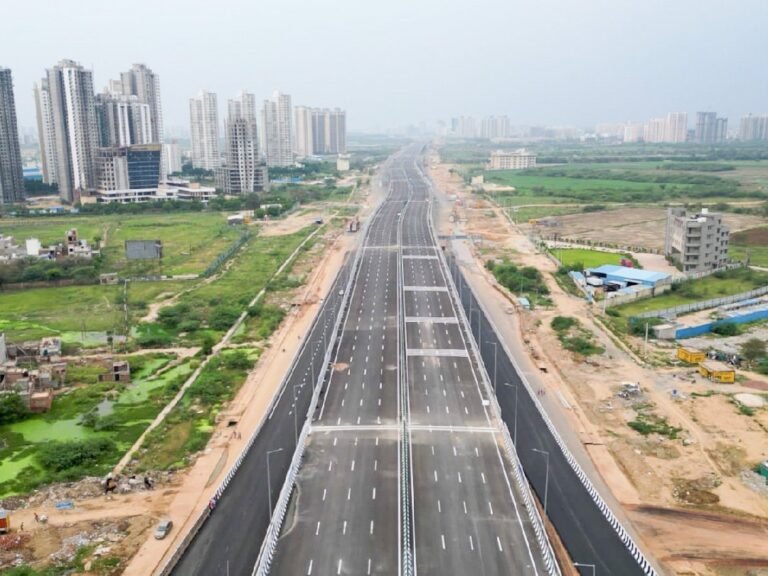
A warehouse lives or dies by truck access. Look for a plot on or very close to a wide, metalled road that can take 40-foot containers, with easy access to NH-48, the KMP (Western Peripheral) Expressway, the Delhi–Mumbai Expressway or the Dwarka Expressway. Proximity to the Western Dedicated Freight Corridor, the Rewari–Garhi Harsaru rail links and Inland Container Depots is a plus for heavy cargo. Check that the approach road is a revenue rasta or public road, not a private path that a neighbour can block.
5. Power, water and drainage
Find out how far the nearest DHBVN substation is and how long a new high-tension connection will take. Check groundwater levels and whether a borewell is permitted, since many blocks in Gurugram district are over-exploited. Low-lying plots near seasonal drains can flood in the monsoon, which damages stock and raises insurance costs.
6. Soil and site conditions
Get a soil test done before you finalise the price. Warehouse floors carry heavy racking and forklift loads, so weak or filled soil means expensive foundations. Check the level of the plot against the road, the shape of the land (rectangular plots plan far better) and any existing structures, trees or graves that may need permissions to remove.
7. Size and future expansion
Modern Grade-A warehouses need space for truck parking, docking bays, a turning radius for trailers, fire tanks, a security block and setbacks on all sides. Buy enough land for these, plus room to add a second shed, cold storage or a mezzanine later. A slightly bigger plot in the right location is usually a better investment than a cheaper plot that cannot grow.
8. Leasing demand and rental value
If you are buying to lease, study the micro-market. Areas with established logistics parks, nearby factories and a steady stream of 3PL and e-commerce tenants lease faster and at better rents. Ask local brokers about current rents per sq.ft., vacancy, typical lease terms and lock-in periods, and compare the expected rent with the total cost of land, CLU, construction and approvals.
9. Approvals for construction
After CLU, a warehouse needs building plan approval, a fire NOC, pollution board consent (for some uses) and, at the end, an occupation certificate. Large tenants will ask for these before they sign. Budget the time and fees for each approval in your project plan.
10. Work with the right professionals
Use a property lawyer for title, a licensed surveyor for demarcation, an architect or engineer who knows DTCP norms, and a real estate consultant who knows the warehousing market. Their fees are small compared with the cost of buying the wrong plot.
Warehouses available with Winworld Realty
Looking for a ready warehouse or land right now? Here are some of the warehouses and warehouse plots we currently have for sale and lease:
- 72,500 sq ft Grade-A warehouse for lease – Farrukhnagar, Gurugram: temperature-controlled, Fire NOC compliant, dock-level loading, near the KMP Expressway.
- 67,500 sq ft warehouse building for lease – Dwarka Sector 28, New Delhi: Basement + Ground + 3 floors, cargo lift, close to Gurugram Road and NH-48.
- 14 acres warehouse / industrial land for sale – near Jhajjar, Haryana: contiguous parcel, 44 ft approach road, near NH-71 and Reliance MET City.
- 25,000 sq ft warehouse for rent – near NH-58, Modinagar: ₹16 per sq ft, suitable for logistics and distribution.
Availability changes often, so contact us for the latest list, rents and site visits.
Buy or lease warehouse land with Winworld Realty
Winworld Realty, at Emaar Emerald Plaza, Sector 65, Gurugram, helps businesses and investors find warehouse land, built-to-suit sheds and pre-leased warehouses across Gurugram, Manesar, Bilaspur, Pataudi Road, Farukhnagar and Sohna. We help with title checks, CLU feasibility and tenant search. Send us your size, budget and preferred location to get matching options.
Frequently Asked Questions
Which documents should I check before buying warehouse land in Haryana?
The latest jamabandi, mutation entries, khasra/killa details, the chain of sale deeds, an encumbrance search and, where relevant, the CLU and any Aravalli or forest NOCs. Get them reviewed by a property lawyer.
Do I need CLU to build a warehouse in Gurugram?
In most cases, yes. If the land is not already in an approved industrial or warehousing zone, you need Change of Land Use permission from DTCP Haryana, and the plot must meet the road-width and size conditions.
Which areas near Gurugram are popular for warehouses?
Bilaspur and the NH-48 belt, Manesar, Pataudi Road and Farukhnagar along the KMP Expressway, Sohna, Taoru and Dharuhera are the main warehousing locations.
Is a soil test really needed?
Yes. Warehouse floors carry heavy loads, and a soil test tells you what foundation you need and whether the plot has any filled or weak ground.
Is buying a warehouse plot a good investment?
It can be, if the land has a clear title, the right zoning, good truck access and real tenant demand. Compare the expected rent with your total cost before you decide.